
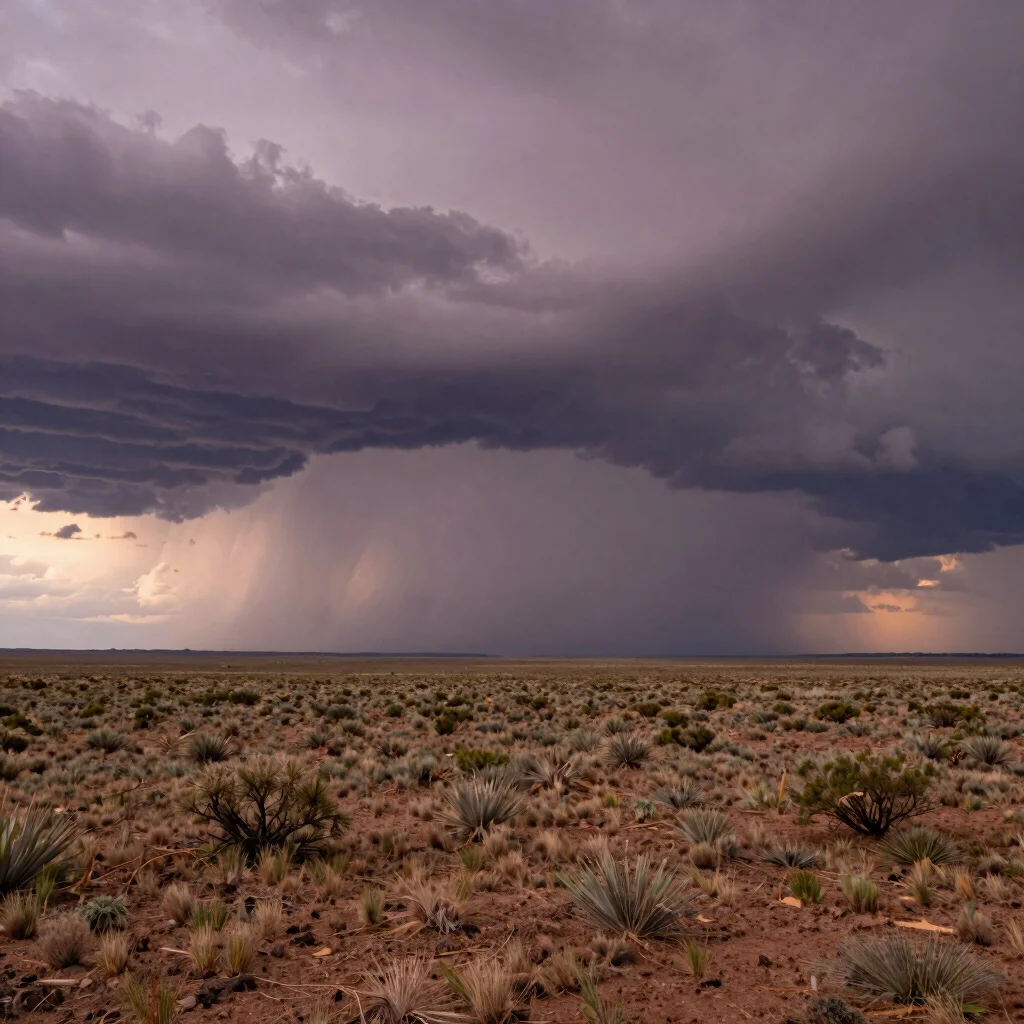
A West Texas storm can announce itself as a change in the color of the far horizon before it becomes anything close to you. I’d rather watch that line gather from a safe place than turn weather into a pursuit. The interesting part is often the pause: the light dimming, the wind changing direction, the land still dry beneath a sky rearranging itself.
Read the Edges First
Look at the boundary between the storm and the open country, not only at the darkest part of the cloud. Rain falling far away may show as a soft gray veil, while dust closer to the ground can blur the line between earth and sky. A few written details—the hour, the wind, the color of the light—make a better record than a dramatic photograph alone.
Distance Is Part of It
The wide horizon makes it tempting to drive toward whatever looks most striking. Don’t mistake a clear view for a safe one: storms can bring lightning, sudden downpours, and dangerous water across roads and arroyos. Watch from somewhere secure, and never enter a flooded crossing.
Keep a Field Note
When the sky begins to clear, notice what remains: a cooler gust, a clean smell in the dust, or one distant ridge still under rain. Those small after-effects are worth recording too. Weather notes don’t need to predict anything; they can simply mark what the day left behind.
Leave a Reply