
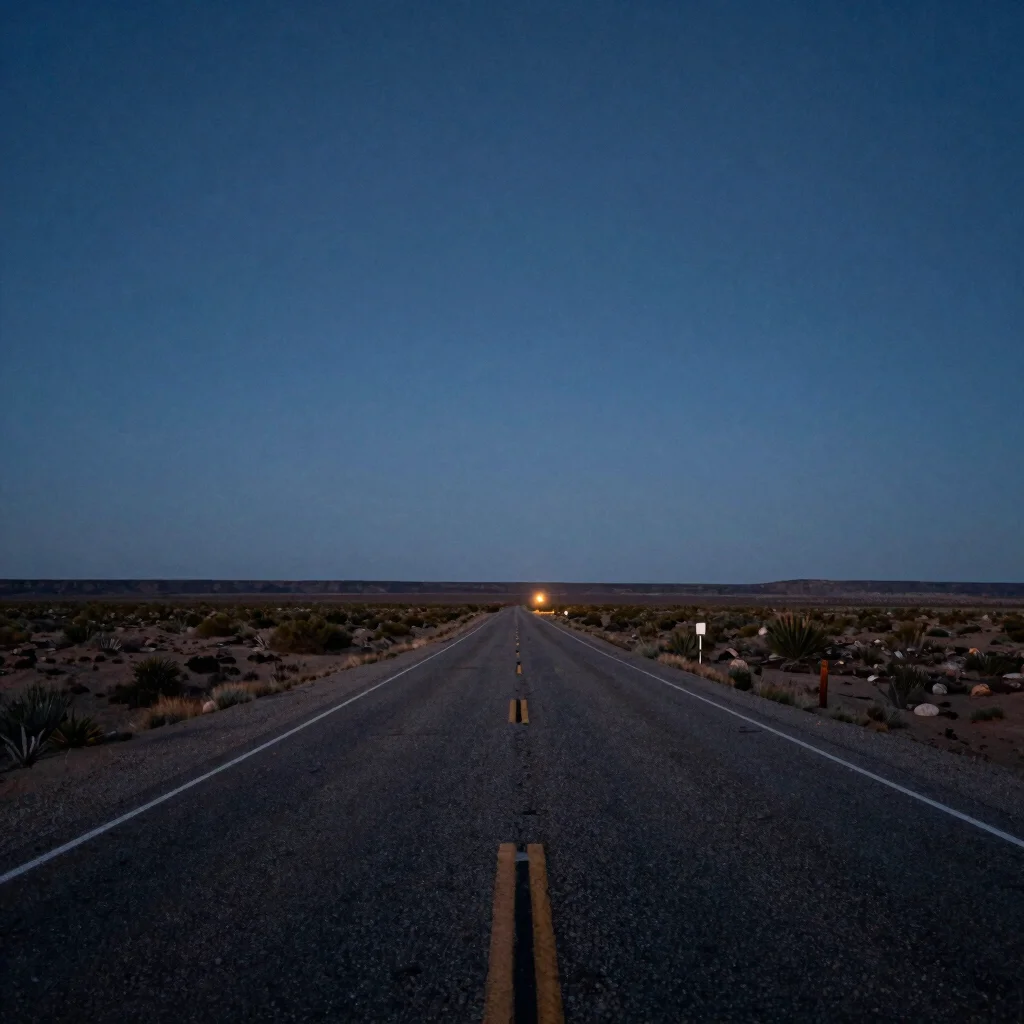
A mile marker, an empty turnout, and one light where the road bends can carry more unease than a page of explanation. That is the balance I want in the Ghost Roads Universe: recognizable Southwest ground, with just enough left unresolved for a reader to keep looking. Mystery works best when the landscape still feels like a place someone might pass through on an ordinary night.
Start With What’s There
Before adding anything uncanny, give a scene its ordinary textures: gravel along the shoulder, distant headlights, a gate set back from the road. In West Texas and New Mexico, a long stretch of open country can already change how distance feels. Concrete details let the reader stand somewhere before the story asks them to doubt what they see.
Keep the Explanation Light
It can be tempting to account for every strange sound or repeated landmark. Resist that instinct when an explanation would close down the scene instead of deepening it. Give the reader a few details they can compare, then leave a little room between them.
Make a Place to Return
A recurring road becomes meaningful through small variations: the same horizon in a different season, a familiar pullout under a different sky, or a route remembered differently by two travelers. Those changes can connect separate pieces of Ghost Roads lore without turning the world into a map of answers. The useful question for a draft is not only “What happened?” but “What detail will stay with the reader after the road disappears?”
Leave a Reply